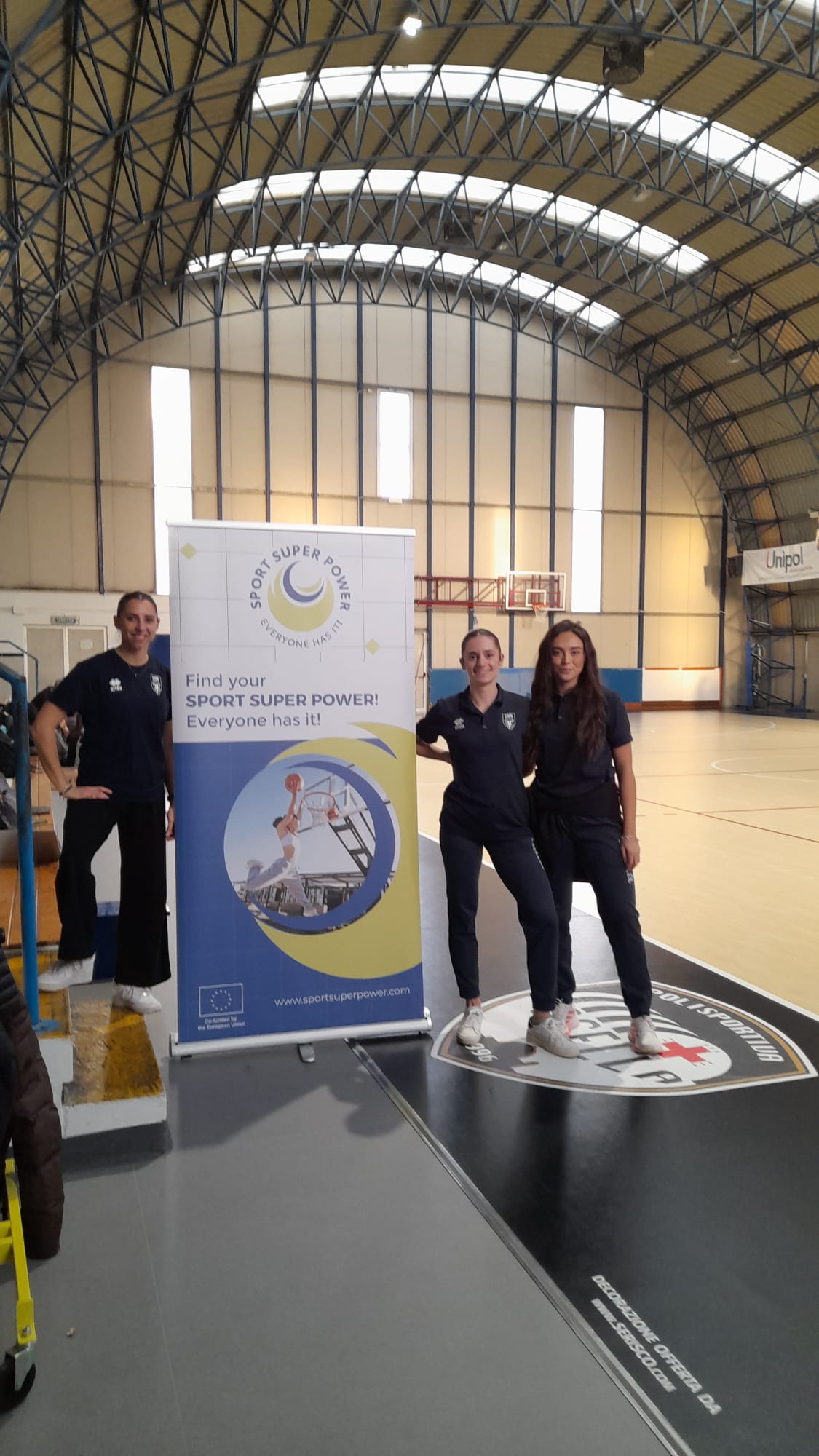
Across the world, insufficient physical activity among children and adolescents has become one of the most significant public health concerns of the 21st century. While international guidelines consistently emphasize the importance of movement, schools and institutions often lack practical systems that connect recommendations with measurable implementation. Many programs promote activity, but only a few generate structured evidence capable of informing policy and improving long-term strategies.
The Sport Super Power project was developed as a response to this gap. By combining standardized motor skill assessment, personalized feedback, and digital monitoring tools, it introduces a structured approach to understanding individual physical potential and encouraging active lifestyles. However, the true value of the project emerges not only from its educational benefits but from its scalability. When expanded across institutions and regions, the initiative evolves from a pedagogical program into a research-grade data ecosystem capable of supporting global recommendations regarding physical activity and health.
This article summarizes the project’s activities from the perspective of information technology, scalability, and long-term impact on international health guidance.
At the core of Sport Super Power lies a standardized battery of physical fitness tests evaluating key motor abilities such as strength, endurance, agility, reaction time, balance, coordination, and flexibility. The tests were intentionally designed to be:
The project therefore introduced an important shift — from sporadic evaluation toward continuous monitoring.
Each participant receives a synthesized fitness index representing their individual “sport super powers.” Instead of ranking students, the system promotes self-development by highlighting strengths and improvement areas. This approach supports motivation, psychological engagement, and inclusion — key factors influencing long-term adherence to physical activity.
However, the innovation is not limited to diagnostics. The project integrates recommendation logic: students receive suggested sports disciplines and corrective exercises tailored to their motor profile. This connects assessment directly with behavioral change.
The project’s most critical component is its digital ecosystem, which transforms a set of physical tests into a scalable system.
A dedicated mobile application enables educators and participants to input results and monitor progress over time. This creates structured datasets rather than isolated measurements. The standardized input format ensures interoperability across institutions and countries.
As a result, the project produces three levels of value:
Without digital architecture, only the first level would exist.
Traditional fitness testing provides snapshots. Sport Super Power provides trajectories.
By allowing repeated measurements over months and years, the platform tracks developmental patterns and behavioral change. This is essential for public health analysis because health outcomes depend more on consistency than single performance indicators.
Because testing protocols and scoring logic are standardized, results can be compared across schools, cities, and countries. This is a crucial step toward global recommendations.
Public health organizations require answers to questions such as:
Scalable datasets enable these comparisons.
The project’s architecture anticipates integration with artificial intelligence and machine learning tools. Large datasets allow pattern detection that is impossible in small studies.
Potential analytical applications include:
In this way, the project moves beyond monitoring toward preventive health analytics.
Health recommendations require more than theoretical benefits of exercise. They depend on implementation evidence — proof that interventions work in real environments.
Scaling the Sport Super Power project contributes to:
Repeated results across different populations confirm universal applicability.
Schools with varied resources can implement the same methodology.
Continuous tracking shows whether behavior changes persist.
Digitalization lowers marginal cost per participant.
Together, these elements transform the project into a policy-relevant framework rather than a local initiative.
International physical activity guidelines traditionally rely on clinical and epidemiological research. However, they often lack implementation models suitable for educational environments.
Sport Super Power provides exactly this missing component: a scalable operational method linking recommendations with everyday practice.
Through large-scale adoption, the project can help answer practical policy questions:
By generating comparable global datasets, the initiative may support the development of recommendations grounded in real-world behavior rather than controlled laboratory settings.
The ultimate significance of scaling lies in transformation.
Sport Super Power evolves through three stages:
When widely implemented, it becomes a standardized framework for measuring and improving youth physical activity globally.
Instead of isolated interventions, policymakers gain a continuous knowledge system — a living observatory of youth physical activity patterns.
The importance of scaling the Sport Super Power project extends far beyond increasing participation numbers. Through its standardized methodology and digital ecosystem, the initiative creates a transferable, evidence-generating model capable of supporting international physical activity recommendations.
By integrating education, sport diagnostics, and data analytics, the project enables continuous monitoring of youth physical development across regions and cultures. This transforms physical education from an activity-based discipline into a measurable component of preventive health strategy.
In a global context, the project demonstrates that effective health promotion does not depend solely on encouraging people to be active. It depends on building systems that can measure, compare, learn, and adapt at scale.
Sport Super Power therefore represents not only an intervention — but a framework for understanding how societies move, and how they can move better.